Who can buy?
Slovakia is one of the more open property markets in the EU. The cadastre (land register) cares about identity and a valid contract, not your immigration status, so you do not need residency or a visa to own an apartment here.
- EU and EEA citizens buy residential and commercial property on the same terms as Slovak citizens.
- Non-EU nationals can buy apartments and buildings without restriction. Only agricultural land and forest land require approval — which does not apply to a city-centre apartment.
- Buying property does not grant residency, and you do not need residency to buy.
- You do not need a Slovak tax ID to purchase, but you must register with the tax authority once you earn Slovak-source income such as rent.
The purchase process, step by step
Costs and taxes
Slovakia is unusually light on transaction taxes. There is no property-transfer tax (abolished in 2005) and no stamp duty, inheritance tax or gift tax on real estate. The main figures to budget for:
| Property-transfer tax | None — abolished in 2005. |
| Notary & cadastre fees | Roughly 0.01–2% of the price, depending on the transaction and registration speed. |
| Legal fees | A few hundred to a few thousand euros, depending on complexity (recommended for foreign buyers). |
| Agency fee | Typically 2–4% of the price, usually borne by the seller (negotiable). |
| VAT | 23% applies only to buildings sold within 5 years of construction. Older / resale property is VAT-exempt. |
| Annual property tax | Modest, set per municipality — a small per-m² rate, among the lowest in the EU. |
| Rental income tax | 19% (rising to 25% on higher income bands). |
Capital gains on resale
This is the rule foreign buyers most often get wrong, so it is worth stating precisely:
- Gains on residential property held for more than five years are exempt from personal income tax.
- If the property was your primary residence, the exemption period drops to two years.
- Sold inside that window, the gain is taxed at 19% or 25%, with acquisition and improvement costs deductible.
Buying remotely
Slovak law lets a non-resident complete the entire purchase without being physically present. Many foreign buyers grant a written power of attorney — legalised by apostille or consular legalisation and, where needed, translated into Slovak by a certified translator — to a local lawyer or agent who handles viewings, signatures, cadastre filing and bank relations. Virtual tours, video calls and electronic document exchange make this routine, though at least one physical visit before final signing is still advisable.
Financing as a non-resident
The most common practical hurdle is a mortgage. Slovak banks can lend to non-residents but typically require local income documentation or EU residency, and a larger deposit — often 30–40% of the value. Many foreign buyers in the prime segment purchase in cash or arrange financing in their home country.
Frequently asked questions
Can a foreigner buy an apartment in Slovakia?
Yes. EU citizens buy on the same terms as Slovak nationals, and non-EU nationals can buy apartments and buildings without a permit. Only agricultural and forest land is restricted, which does not affect a city-centre apartment.
Do I need residency or a visa to buy property in Slovakia?
No. Ownership is recorded in the cadastre based on identity and a valid contract, independent of immigration status. Buying property also does not by itself grant residency.
What taxes do I pay when buying property in Slovakia?
There is no property-transfer tax. You pay modest notary and cadastre registration fees (roughly 0.01–2%) and, if you use one, legal fees. VAT of 23% applies only to new buildings sold within five years of construction.
What is the capital-gains tax on selling property in Slovakia?
Gains on residential property held more than five years are exempt from income tax (two years for a primary residence). Sold within that period, the gain is taxed at 19% or 25%, with acquisition and improvement costs deductible.
Can I buy property in Slovakia remotely?
Yes. A non-resident can complete the purchase through a written, legalised power of attorney granted to a local lawyer or agent, who handles signatures and cadastre filing. A physical visit before final signing is recommended but not legally required.
Can a non-resident get a mortgage in Slovakia?
Slovak banks can lend to non-residents but usually require local income or EU residency and a deposit of around 30–40%. Many prime-segment buyers purchase in cash or finance in their home country.
How long does the purchase take?
Once the contract is signed, cadastre registration — the point at which ownership legally transfers — typically takes about 30 days under the standard procedure.
This guide is general information on the 2026 framework, not legal or tax advice. Rules depend on individual circumstances — confirm your position with a Slovak lawyer and tax advisor before purchase.
Looking at a property in the Old Town?
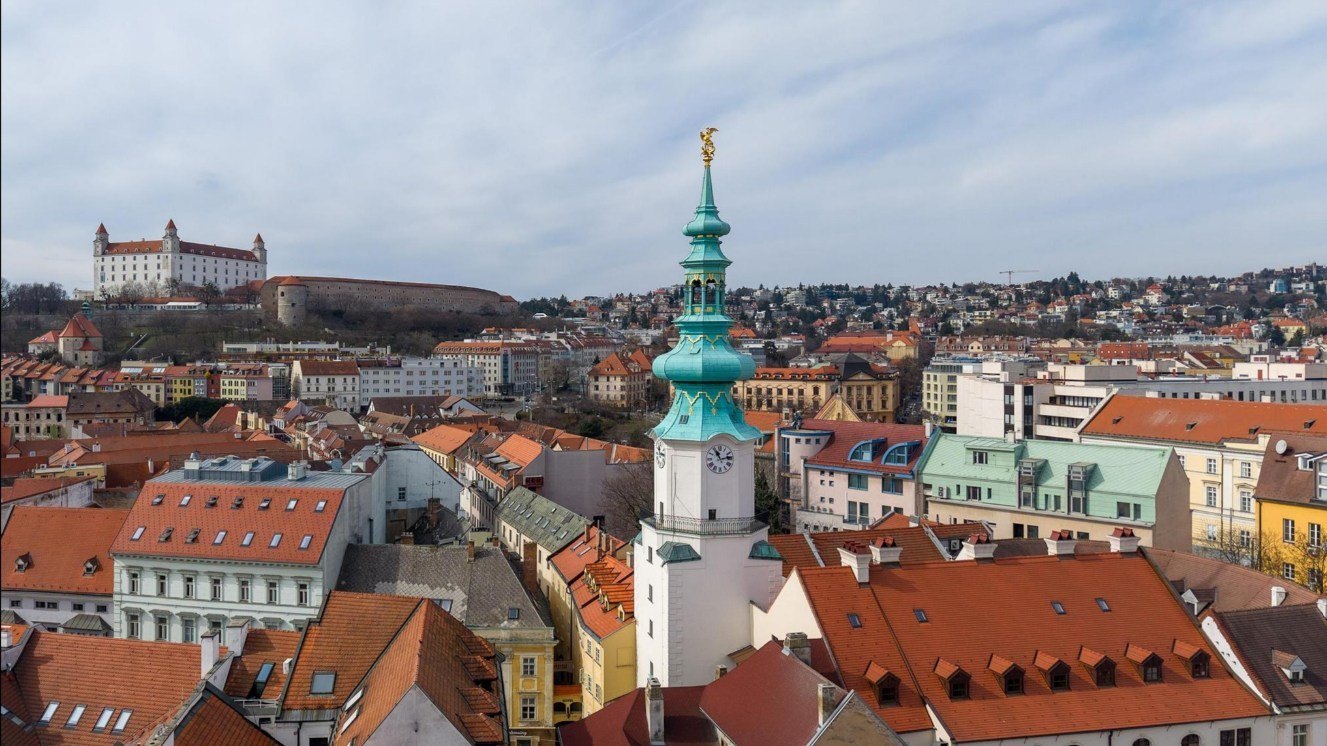
Zámočnícka 9 offers eleven freehold residences in a fully restored medieval house in Bratislava's historic centre — with full guidance for foreign and remote buyers.
Request the sales portfolio